


EXCLUSIVE: George Clooney told an interviewer a year ago, “I don’t want to be anywhere near the highest-paid actor on Broadway.”
Nonetheless, Good Night, and Good Luck’s record-breaking ticket sales last spring helped generate one of the biggest paydays from a limited-run play. The 64-year-old Hollywood star earned at least $9 million in his Broadway debut, according to production financial statements filed with the office of New York Attorney General Letitia James in November.
Despite rising costs and elusive profits, Broadway can still be lucrative, especially for a celebrated leading man multitasking on a smash hit. The actor did everything but run credit cards at the Winter Garden Theatre box office over its 13-week run. He portrayed Edward R. Murrow, the venerated CBS newscaster who took on the red-baiting demagogue Senator Joseph McCarthy; Clooney wrote the play with Grant Heslov; and he produced it with Heslov, Seaview Productions, John Johnson and Sue Wagner.
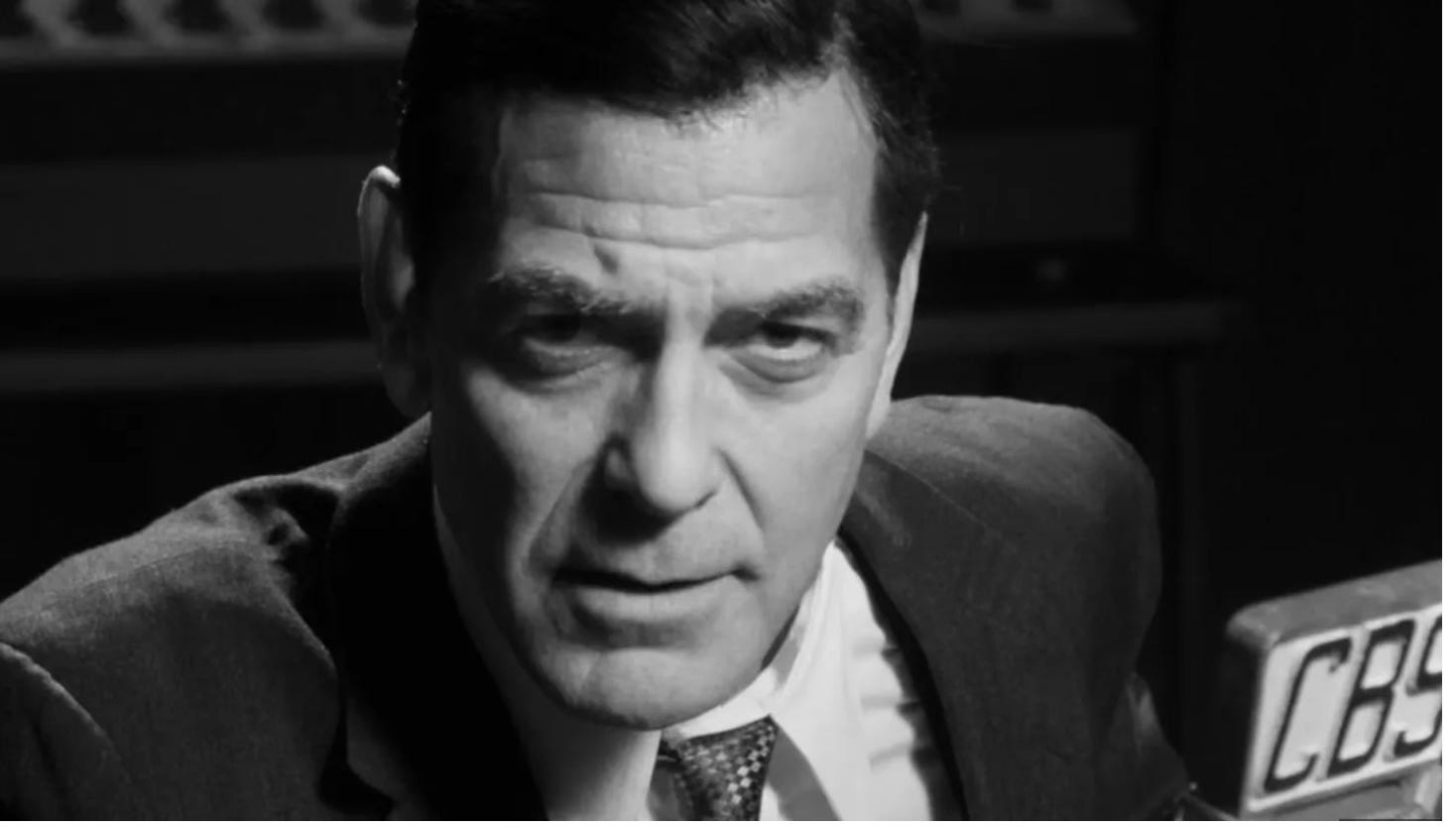
Clooney sat for more than a dozen interviews to promote the show, which was based on the film of the same name that he directed and co-wrote two decades earlier. In his media appearances, he defended the importance of independent reporting amid President Trump’s efforts to undermine it. “Journalism and telling truth to power has to be waged, like war is waged,” the actor said on CBS’ 60 Minutes. “It doesn’t just happen accidentally.”
The money followed a model from the movie business: a relatively modest salary coupled with a generous share of the upside. Clooney’s $125,000 weekly salary was 47 times the Broadway minimum pay negotiated by Actors’ Equity Association. But it was low for a star of his stature. Al Pacino earned the same salary leading a Glengarry Glen Ross revival 12 years earlier, which adjusted for inflation would be $178,000 today.
Clooney was entitled to 10 percent of Good Night, and Good Luck’s weekly grosses above $1.25 million. That star royalty wouldn’t add up to much on most plays. On this one, it added up quickly.
Good Night repeatedly broke records at the roughly 1,535-seat Winter Garden for the highest weekly box office sales for a play. That culminated in a $4.3 million gross in its final week on Broadway. The brief run totaled an astounding $48 million. (Royalties are paid on the basis of the still-astronomical net gross of $44 million, which excludes fees and expenses that the production doesn’t keep.)
Clooney earned $3.5 million in star royalties; $1.3 million in star net profit participation after the show recouped its $9.5 million capitalization; $3 million in author royalties that he shared with Heslov; $1.9 million in royalties he shared with the other lead producers; and about $5 million in adjusted net profits he shared with the other lead producers and to a lesser extent, co-producers.
Although Good Night tickets were priced as high as $825, Clooney and the other producers left money on the table to make the show more accessible. With help from TodayTix, they gave 2,000 tickets to public school students. They also subsidized a live telecast of the play on CNN at the end of its engagement.
As Clooney conquered Broadway, the play’s investors, director, theater owner and other producers also cleaned up. Here’s a summary of the biggest components:
Star — George Clooney
Salary: $1,625,000
Royalties: $3,500,000
Profit participation: $1,250,000
Subtotal (Clooney): $6,375,000
Author — Clooney & Grant Heslov
Royalties: $3,000,000
Producers — Clooney, Heslov, Seaview, John Johnson & Sue Wagner
Royalties: $1,870,000
Profit participation: $477,000
Adjusted Net Profits: $5,000,000*
Subtotal (Producers): $7,347,000
Director — David Cromer
Royalties: $1,690,000
Fee: $100,000
Subtotal (Director): $1,790,000
* An undisclosed portion of adjusted net profits was shared with co-producers as a reward for raising capital.
Source: Do Not Walk in Fear LLC financial results.
Without knowing how the producers and authors divided their royalties and profits, it’s difficult to tabulate Clooney’s precise haul. (My $9 million estimate is conservative.) Nor does this story account for what he paid his agent, Bryan Lourd, at Creative Artists Agency.
A Clooney spokesman didn’t return emails; John Johnson didn’t respond to a text.
Clooney has made a fortune in movies, television and tequila and it’s unlikely that money was a motivation for this passion project. The son of a journalist, he’s a high-profile activist on behalf of the First Amendment and humanitarian causes and he raises money for the Democratic Party.
Good Night was a big, expensive show that largely adhered to its budget. Its weekly operating expenses averaged about $1.1 million plus royalties. That was slightly higher than estimated in the pre-production investor documents, but a fraction of its $3.4 million average weekly gross. (The average gross is calculated from the net gross, for an apples-to-apples comparison.)
Director David Cromer’s $1.7 million in royalties was roughly three times that of John Benjamin Hickey — the director of the Plaza Suite revival — or Leopoldstadt director Patrick Marber, according to those recent shows’ results.
The production’s theater-related expenses totaled about $7.5 million. That includes $3 million in percentage rent, equivalent to the standard 7 percent of box office sales. The Shubert Organization owns the Winter Garden.
Investors in the show recouped their money and earned about a 55 percent return, according to the financial papers. That’s high for a limited-run play. In addition to the blockbuster sales, the producers and investors benefited from a $3 million tax credit from New York state.
The Broadway League has indicated (belatedly) that it will seek to close a loophole in the tax credit program, which, once plugged, would require successful shows to repay some of the aid to the state. American theater has no shortage of existential crises, but every so often it has a bona fide money machine — one that hardly needs government support.
Thanks for this great reporting
Great article and reporting! Love the inside stories of the ups and downs of Broadway.