


A decade after Hamilton opened on Broadway and the Public Theater began reaping roughly $100 million for helping to develop the blockbuster musical, the legendary downtown nonprofit company is undergoing its third round of layoffs in four years.
The production department appears to have taken the biggest hit, with smaller cuts in producing, general management, development, audience services (ticketing) and Joe's Pub. Top administrators and managers are among the casualties.
At least 15 employees were removed from the Public’s online staff list in recent weeks and their positions haven’t been filled. (I compared the current list with a copy saved from November.) Three additional staffers either told colleagues that they were fired or disclosed on LinkedIn that they’re job-hunting. That’s close to 10% of the organization’s headcount, and the total is likely higher. Artistic Director Oskar Eustis — currently on sabbatical in Australia — Executive Director Patrick Willingham and a Public spokeswoman didn’t return emails.
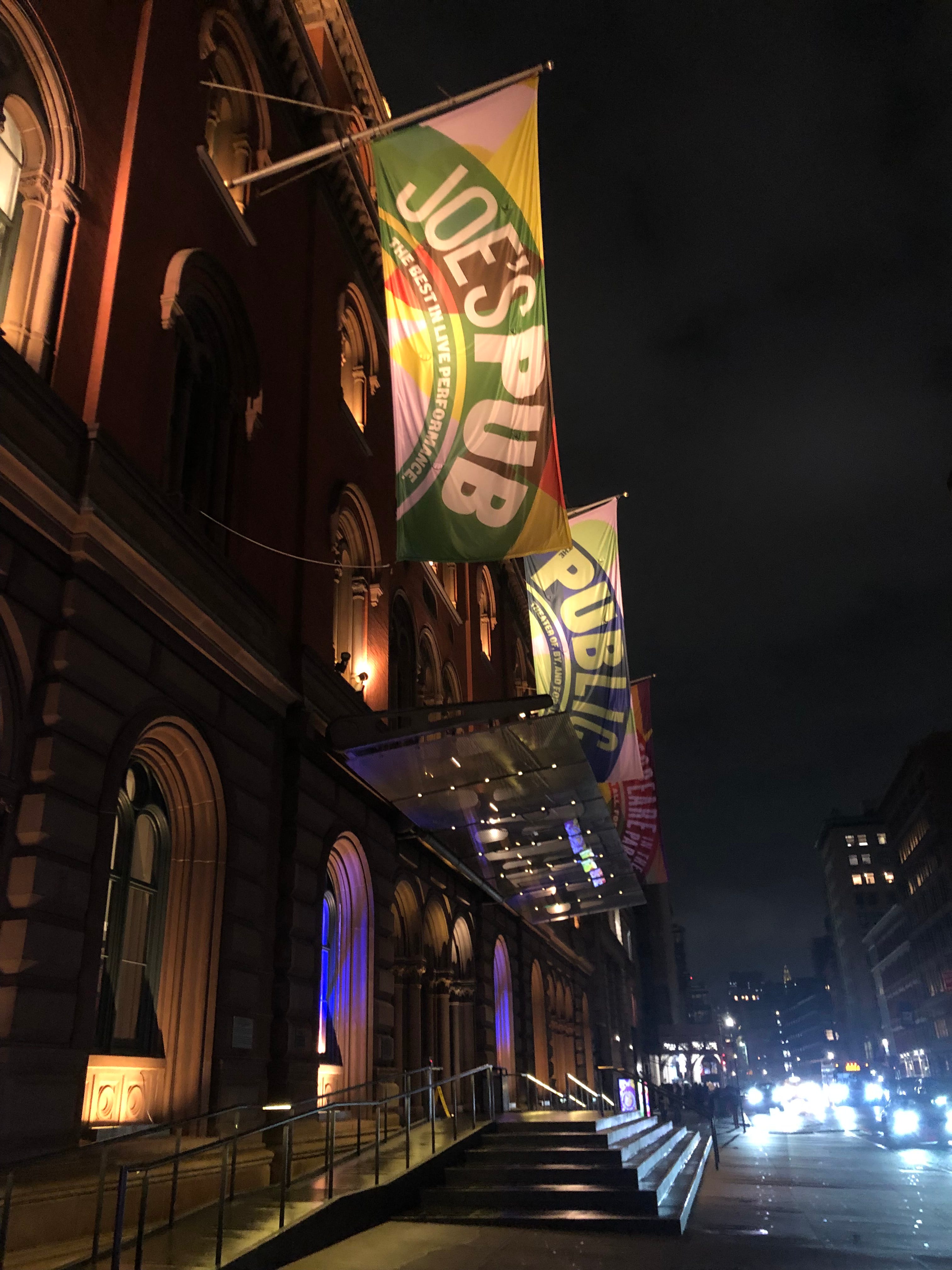
The Public is contracting as it produces fewer shows at its Astor Place headquarters and hosts more work by outside organizations. Two productions this season come from the Ma-Yi Theater Co., a “resident” company that’s a prominent incubator of Asian-American plays.
A third, Seagull: True story, is produced by the MART Foundation, an American nonprofit that supports contemporary performing arts internationally.
The timing of the layoffs may seem odd. The Public is only four months into its fiscal year. Last month, Hamilton posted ticket sales of $4.9 million in Leslie Odom Jr.’s final week reprising his role as Aaron Burr, making it the highest-grossing Broadway show ever over an eight-performance week.
But Hamilton royalties and profit share are off their highs. There’s just one North American touring company, down from four before the pandemic. The Public’s royalty and subsidiary rights income — dominated by Hamilton — plunged from $24 million in 2018-19 to $7 million in 2023-24, according to the company’s audited financial statements.
Initially, the Public — which years earlier produced A Chorus Line and Hair — used Hamilton income to rebuild its financial reserves. Since the pandemic, in a harsher environment for nonprofit theater, Hamilton proceeds have subsidized operating budgets, a practice that management appears eager to curb.
Eustis has said that he wants to make the company more sustainable before stepping down in July 2028, when his 10-year contract expires. “I really hope I can get the Public back on a really stable economic and cultural footing before I leave so I’m handing over a really solid enterprise to my successors.” he told podcaster Guy Raz in 2024
Recurring job cuts haven’t promoted stability internally. The company reduced staff in late 2021 upon reopening after the Covid-19 shutdown, and again in the summer of 2023, when it laid off roughly 50 people — 19 percent of its full-time workforce — citing declining revenue and rising costs. It also jettisoned the Under the Radar Festival, although it continues to be involved. Next month, it will host three of the festival’s 32 shows.
Executive compensation has long been a sensitive issue at the Public, especially when it’s firing people. Eustis earned $1.1 million in pay and benefits in 2023; Willingham’s total comp was $694,000, according to the Public’s latest tax filing.
The company’s production workers recently ratified a union contract with the International Alliance of Theatrical Stage Employees (IATSE). The agreement, which took effect September 1, delivered “meaningful wage increases and comprehensive benefits,” the Public and IATSE said in a joint release at the time.
It remains unclear whether the IATSE contract contributed to the latest layoffs, or how its provisions apply when the Public presents work by outside companies. One senior IATSE official told Broadway Journal that nonunion companies must negotiate temporary agreements to work at the Public. “We cover all work there, as far as I know,” he said.
Laid-off Public staffers receive a couple of weeks of pay and a little over a month of healthcare. For additional severance, they’re required to sign a separation agreement that includes a non-disparagement clause. “I will not do or say anything (whether written or oral) that is intended, or might reasonably be expected, to harm or disparage the Public,” reads the confidential agreement, which was obtained by Broadway Journal. Payment is contingent on “continued compliance” with the terms.
One former employee noted a disconnect between the corporate-style HR policy and the Public promoting civic engagement — via Shakespeare in Central Park; the Mobile Unit, which presents free theater in other parks and correctional facilities and community centers; and Public Works, in which community members take classes and participate in performances.
Ideally, Eustis and Willingham would explain why the storied institution that presents summer theater that’s “free for all” conditions severance on silence — and why a company founded on radical free expression demands its laid-off workers give theirs up.
HOLIDAY BOOK RECOMMENDATION: Out of My Head, a delightful memoir and how-to book by playwright Billy Aronson published earlier this year, is peppered with wise lessons: Though there’s a place for tradition in the arts, in the end your work will be noticed not for the rules you follow but for the rules you break. And: When talking money with your collaborator, get it in writing. Aronson is credited with the original concept and additional lyrics for Rent, and a highlight is his depiction of the late composer-lyricist Jonathan Larson and their collaboration:
He was tall, his hair stuck out from the top of his head, his ears stuck out and his feelings stuck out. Even when Jonathan was quiet I could sense his restlessness to make things happen. It didn’t matter how poor this guy was, how many years he’d been waiting tables, or the fact that he’d never had a show produced, he believed he was going all the way and never stopped swinging for the fences. With complete confidence Jonathan told me that our “Boheme” would be our generation’s “Hair” and bring the MTV generation back to the theater. I thought he was nuts, but in a good way.
Unfortunate to hear of the current plight of The Public. Joe Papp must be rolling in his grave, and Lin-Manuel must be - - more than - - disappointed- - that his legacy to The Public is vanishing.
Don't they pay the Artistic Director like $1.1M/Y? Didn't they make like 1.2 one year during the quarantine then cut it back to $880K/Y or something like that? I could be wrong, but why lay off low paying workers when someone in the office is making that much at a non-profit theatre...